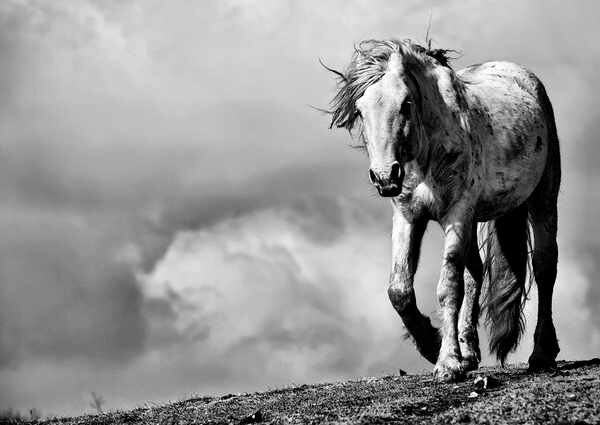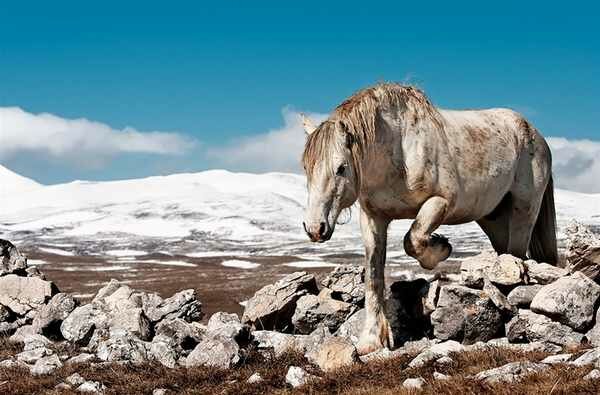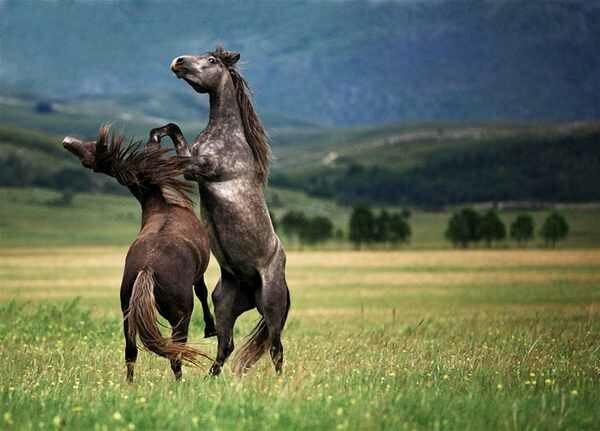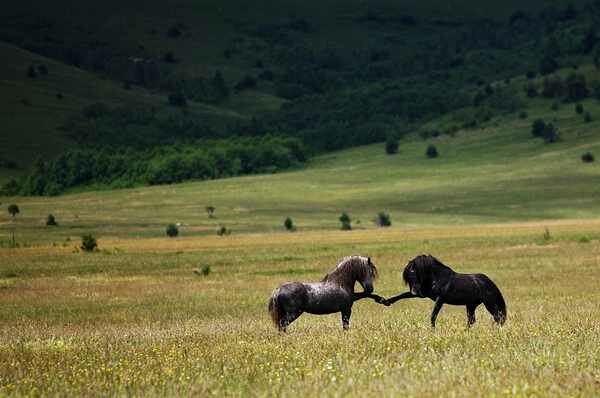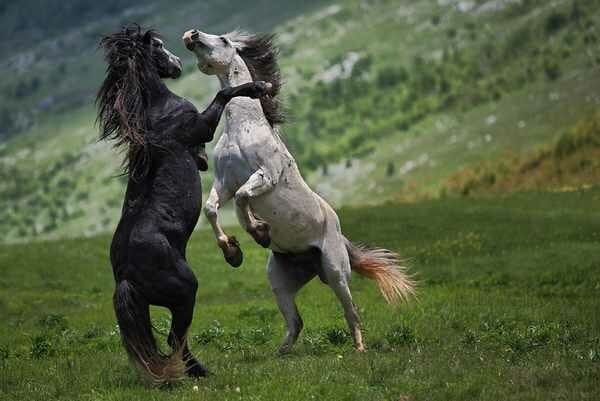
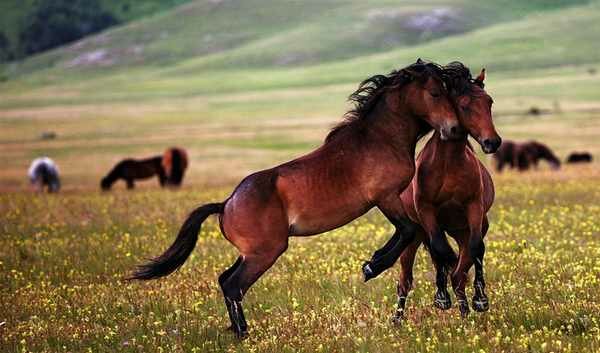
Dance Of Wild Horses

0 Shares
0
0
0

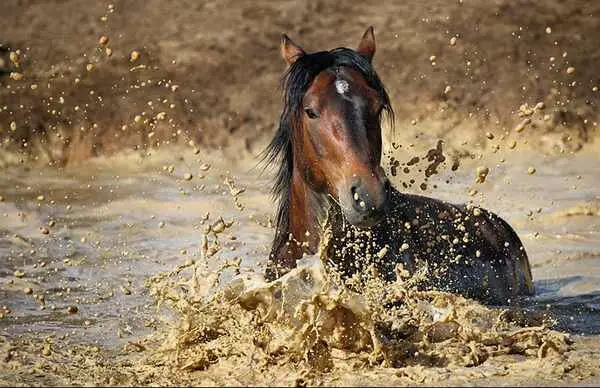
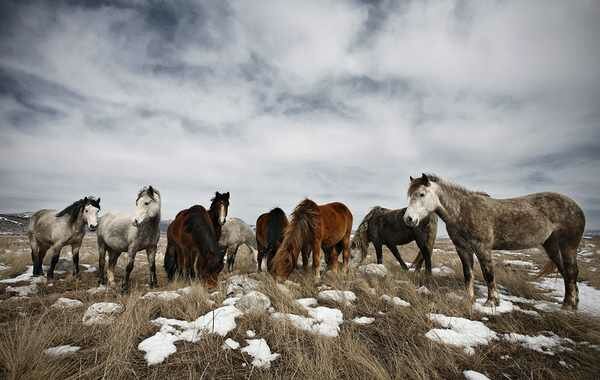
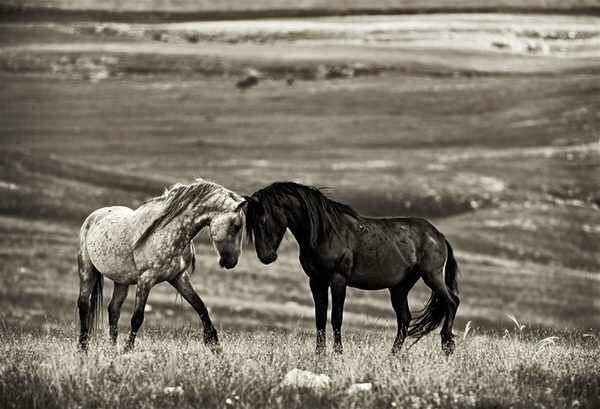
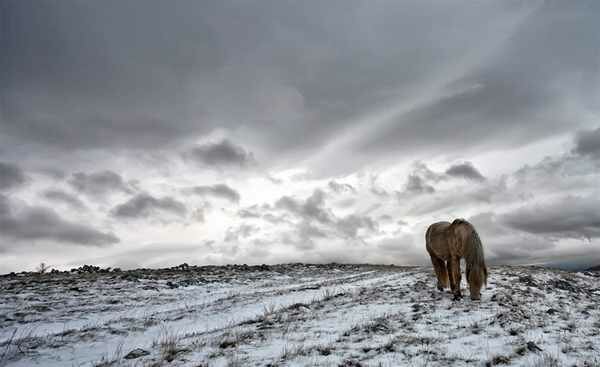
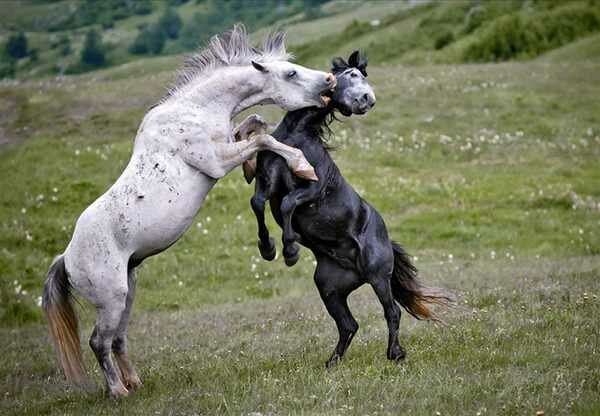
The wild horse is a species of the genus Equus, which includes as subspecies the domesticated horse as well as the undomesticated Tarpan and Przewalski’s Horse. The Tarpan became extinct in the 19th century, and Przewalski’s Horse was saved from the brink of extinction and reintroduced successfully to the wild. The most likely ancestor of the domestic horse was the Tarpan, which roamed the steppes of Eurasia at the time of domestication.Since the extinction of the Tarpan, attempts have been made to reconstruct the phenotype of the Tarpan, resulting in horse breeds such as the Konik and Heck horse. However, the genetic makeup and foundation bloodstock of those breeds is substantially derived from domesticated horses, and therefore these breeds possess domesticated traits.
0 Shares
You May Also Like

Top 10 Best Guard Dog Breeds

A total of fourteen expert dog trainers were consulted to compile this list of the top ten best guard dog breeds. During their evaluation they considered not only a dog's temperament and physical strength, but its courage, loyalty, and resistance to pain.

Dance Of Small Swans

Swans, genus Cygnus, are birds of the family Anatidae, which also includes geese and ducks. Swans are grouped with the closely related geese in the subfamily Anserinae where they form the tribe Cygnini. Sometimes, they are considered a distinct subfamily, Cygninae.

Breathtaking Kittie’s Eyes

Cats are similar in anatomy to the other felids, with strong, flexible bodies, quick reflexes, sharp retractable claws, and teeth adapted to killing small prey. As nocturnal predators, cats use their acute hearing and ability to see in near darkness to locate prey.

Cats That Look Like Hitler

Another of the many wonders of nature, of course with the addition of genetics. All this is really random and has no setup is really unique to see a cat with a Hitler mustache. Whiskers in fact not real but is just such a co-hair under the nose, the respective cats.

What A Great Beast

Iguana is a genus of lizard native to tropical areas of Central and South America and the Caribbean. The genus was first described by Austrian naturalist Josephus Nicolaus Laurenti in his book Specimen Medicum, Exhibens Synopsin Reptilium Emendatam cum Experimentis circa Venena in 1768.