Birth Of The Cicada

0 Shares
0
0
0

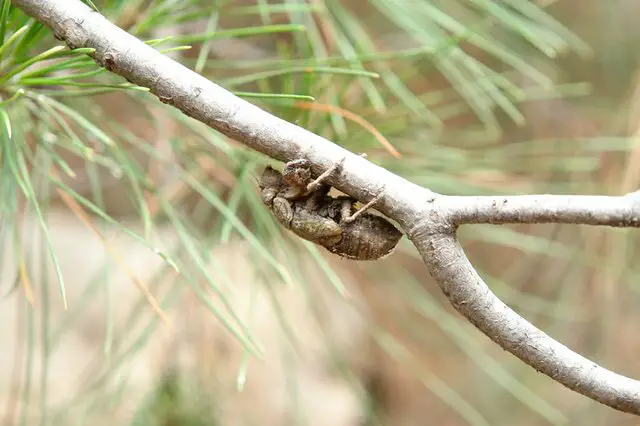
A cicada is an insect of the order Hemiptera, suborder Auchenorrhyncha, in the superfamily Cicadoidea, with large eyes wide apart on the head and usually transparent, well-veined wings. There are about 2,500 species of cicada around the world, and many remain unclassified. Cicadas live in temperate to tropical climates where they are among the most widely recognized of all insects, mainly due to their large size and remarkable acoustic talents. Cicadas are often colloquially called locusts, although they are unrelated to true locusts, which are a kind of grasshopper. They are also known as “jar flies” and, regionally, as July flies in the Southeastern United States, and as “heat bugs” in Canada and the mid-West. Cicadas are related to leafhoppers and spittlebugs. In parts of the southern Appalachian Mountains in the United States, they are known as “dry flies” because of the dry shell that they leave behind.

0 Shares
You May Also Like

Christmas Feast Of Monkeys And Lemurs

Check out these great photos from the zoo during feeding of certain animal species. In this case, monkeys and lemurs. Time events of this extraordinary feast as Christmas and New Year holidays.

Badass Monkey Smokers Company

This is a rather dangerous gang .. All the monkey to monkey, they are .. Nicotine addicts and are not afraid of anything to come up cigarette .. They smoke pipes, cigars with or without a filter..

Animal Heat

As long as people flee from the heat under the air conditioning and sea animals in the zoo has no choice how to do the same in the basins, placed in their cages, and with the help of fruit ice, fruit.

Badass Karate Monkey

Karate Monkey? It sounds impossible, where it exists, must be a joke. How is it possible that he knows karate? It is possible, patient master of karate in Japan with a few secret ingredients he was able to train the common chimpanzees to learn a few floors of this noble sport.

Snow Leopard

The snow leopard is a moderately large cat native to the mountain ranges of Central Asia. The classification of this species has been subject to change and its exact taxonomic position will not be resolved until further studies are conducted.